

.png)
The First Step Forward 👣➡️
I didn’t choose digital transformation. It chose me after I complained enough.
As a Senior Podiatrist, my work is deeply clinical: high-risk feet, musculoskeletal issues, and everything we’re trained to manage. What I wasn’t trained for was the amount of time spent fighting systems instead of caring for patients. Manual screening and scheduling, multi-step documentation, processes with five steps when one would do. For a while, I assumed this was simply "how healthcare works".
Then the frustration hit a point where ignoring it took more effort than fixing it. Technology exists to make things better, so I began experimenting - initially just to solve my own daily pain points. That meant building the Epic Reporting Workbench to surface the right clinical information faster, exploring ways to automate roster planning to reduce manual coordination, and testing small automations and AI tools wherever friction appeared. Nothing fancy, just curiosity and a mild refusal to accept unnecessary inefficiency.
Somewhere along the way, I became the person in meetings who says, “Perhaps we can automate this,” which is how I accidentally picked up a digital transformation portfolio.
With that shift came opportunities to think beyond my own workflows and look at how technology could meaningfully support care teams across the organisation. One recurring pain point was the amount of time our nurses and care teams spent on routine but necessary tasks: answering frequently asked questions, orienting newly admitted patients, and repeating the same information throughout the day. This sparked the AI Avatar initiative at JurongHealth Campus.


Designed to enhance, not replace, the human touch in patient care, the AI Avatar delivers consistent, multilingual information around the clock.
By letting AI Avatar handle the repetitive interactions, we give nurses back the time and cognitive space to focus on what they do best: providing attentive, compassionate care at the bedside. Technology handles the informational; our people focus on the personal. This is the principle at the heart of this initiative: AI as a force multiplier for human care, not a substitute for it.
The journey has been equal parts exciting and eventful. There were wins, failures, and many moments of “Wait… does this work?” followed by “I have no idea what I’m doing, but we have to start somewhere.”
Small fixes, big brain energy. The results are smoother workflows, time saved, better visibility, and new ways to deliver care.


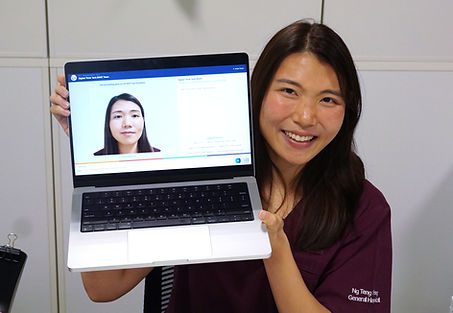

Clinical by training. Stubborn problem-solver by personality. Chaotic builder by accident. If there's one thing I've learned, it's that innovation in healthcare doesn’t start with technology. It starts with someone being uncomfortable enough with the status quo to try something different.
Written by Beatrice Koh, Senior Podiatrist, Podiatry, NTFGH